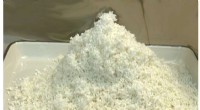
Pool chlorine and household bleach both contain hypochlorite ion, which is the chemical agent responsible for their “bleaching” action. Pool chlorine, however, is substantially stronger than household bleach.
The most common source of pool chlorine is calcium hypochlorite, Ca(OCl)?. Other methods of chlorination, such as chlorine gas or chloramines, are sometimes used in public or commercial pools. Household bleach contains sodium hypochlorite, NaOCl.
The calcium hypochlorite sold specifically for swimming pools contains about 65 percent active ingredient by weight. Household bleach typically contains between 5 and 6 percent (by weight) sodium hypochlorite.
Both calcium hypochlorite and sodium hypochlorite dissolve in water to release hypochlorite ion. Depending on the pH of the pool, the hypochlorite may or may not be converted to hypochlorous acid, or HOCl, whose oxidizing properties kill germs.
Hypochlorite ion and hypochlorous acid together constitute “free available chlorine.” FAC effectively represents the disinfecting power in an aqueous (water-based) solution.
One gram of pool chlorine (65 percent calcium hypochlorite), dissolved in 1 liter of water, would provide a FAC level of 0.47 grams per liter, whereas the same amount of household bleach (6 percent sodium hypochlorite) dissolved in the same amount of water would provide a FAC level of 0.04 grams per liter.
Thus, gram for gram, the pool chlorine will provide 11 times more FAC than household bleach.