Here's a breakdown:
* Concentration: The amount of a substance in a given volume.
* Gradient: A gradual change in a value over a distance.
Therefore, a concentration gradient refers to a change in concentration of a substance from one point in space to another.
Example:
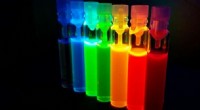
Imagine a drop of dye placed in a glass of water. The dye will gradually spread out, creating a concentration gradient. The dye concentration is highest near the drop and decreases as you move further away.
Concentration gradients are important in many biological and chemical processes, including:
* Diffusion: The movement of molecules from an area of high concentration to an area of low concentration.
* Osmosis: The movement of water molecules across a semipermeable membrane from an area of high water concentration to an area of low water concentration.
* Active transport: The movement of molecules against a concentration gradient, requiring energy input.