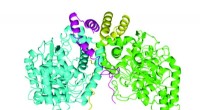
This reaction happens in the decarboxylation step of the pyruvate dehydrogenase complex (PDC). The PDC is an enzyme complex that converts pyruvate to acetyl-CoA, a key step in cellular respiration.
Here's a simplified breakdown:
1. Pyruvate enters the mitochondria, the powerhouse of the cell.
2. PDC catalyzes the decarboxylation of pyruvate, meaning it removes a carbon dioxide molecule from pyruvate.
3. The remaining two-carbon molecule is then oxidized and combined with coenzyme A (CoA) to form acetyl-CoA.
So, while it might seem confusing that CO2 reacts with pyruvic acid to release CO2, it's important to remember that this is a decarboxylation reaction, meaning a carbon dioxide molecule is removed from pyruvate.