Here's a breakdown:
1. Electrons from NADH and FADH2: The electron transport chain starts with electrons donated by NADH and FADH2, which are generated during earlier stages of cellular respiration (glycolysis and the citric acid cycle).
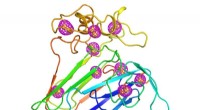
2. Electron carriers: These electrons are passed down a chain of protein complexes embedded in the inner mitochondrial membrane. Each complex has a higher affinity for electrons than the previous one, driving the electron flow.
3. Proton pumping: As electrons move through the chain, they release energy, which is used to pump protons (H+) from the mitochondrial matrix across the inner membrane into the intermembrane space. This creates a proton gradient, with a higher concentration of protons in the intermembrane space.
4. ATP synthesis: The proton gradient represents potential energy, which is harnessed by ATP synthase, an enzyme also embedded in the inner membrane. Protons flow back into the matrix through ATP synthase, driving the synthesis of ATP from ADP and inorganic phosphate.
So, while the electron transport chain doesn't produce a molecule in the traditional sense, it's essential for generating the proton gradient that powers ATP production, which is the primary energy currency of cells.