1. The Lock and Key Model:
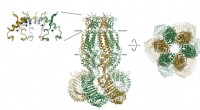
* Enzymes have a specific three-dimensional shape with an active site.
* The active site is a region that binds to the substrate, the molecule the enzyme acts upon.
* The shape of the active site is complementary to the shape of the substrate, much like a lock and key.
2. Enzyme-Substrate Complex Formation:
* When the substrate binds to the active site, it forms an enzyme-substrate complex.
* This binding is temporary and highly specific.
3. Lowering Activation Energy:
* Enzymes lower the activation energy by:
* Providing an alternative reaction pathway: The enzyme creates a different reaction pathway that requires less energy to start.
* Stabilizing the transition state: The enzyme interacts with the substrate, straining its bonds and making it easier to break.
4. Product Formation and Release:
* The enzyme facilitates the chemical reaction, leading to the formation of the product.
* The product then detaches from the active site, leaving the enzyme free to bind to another substrate molecule.
5. Factors Affecting Enzyme Activity:
* Temperature: Enzymes have an optimal temperature range. Too high or too low temperatures can denature the enzyme, altering its shape and function.
* pH: Enzymes also have an optimal pH range. Changes in pH can affect the ionization state of amino acids in the active site, disrupting its function.
* Substrate concentration: Increased substrate concentration generally leads to increased reaction rate until the active sites are saturated.
* Inhibitors: Inhibitors can bind to the enzyme and block its activity.
In summary, enzymes accelerate chemical reactions by lowering the activation energy required for the reaction to proceed. They do this through specific binding with the substrate, facilitating the chemical reaction, and releasing the product. Their activity is influenced by various factors like temperature, pH, and the presence of inhibitors.