Here's what the experiment tells us about the organic compounds needed for life:
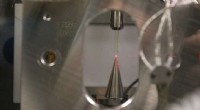
* Organic molecules can be formed from inorganic matter: The experiment simulated the conditions of early Earth's atmosphere (including water, methane, ammonia, and hydrogen) and subjected them to electric sparks (simulating lightning). This resulted in the formation of a variety of organic molecules, including amino acids (the building blocks of proteins), sugars, and nitrogenous bases (components of DNA and RNA).
* Early Earth conditions were conducive to life's origin: The Miller-Urey experiment demonstrated that the primordial soup of early Earth could have provided the necessary ingredients for the formation of life's building blocks.
* Life might not be unique to Earth: The experiment suggests that life could potentially arise on other planets with similar atmospheric conditions and energy sources.
Limitations of the Miller-Urey experiment:
* The composition of Earth's early atmosphere is still debated: Modern research suggests that the composition of early Earth's atmosphere may have been different from what was used in the experiment.
* It doesn't explain the origin of life itself: The experiment only showed the possibility of forming organic molecules, not the origin of self-replicating systems or complex cellular structures.
Despite its limitations, the Miller-Urey experiment remains a landmark in the study of the origin of life. It provided compelling evidence that the building blocks of life could have arisen from non-living matter, opening up a whole new field of research and fueling ongoing investigations into the origin of life on Earth and beyond.