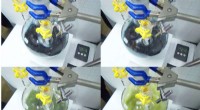
* Chemical properties describe how a substance reacts or changes its chemical composition when interacting with other substances. Examples include flammability, reactivity with acids, and the ability to rust.
* Physical properties can be observed or measured without changing the substance's chemical composition. These include color, hardness, melting point, boiling point, density, and conductivity.
Let's break down color and hardness:
* Color: This is how a substance interacts with light, a purely physical phenomenon. The color doesn't change the substance's chemical makeup.
* Hardness: This refers to a substance's resistance to scratching or indentation. Again, this is a physical property, and scratching doesn't alter the substance's chemical composition.
In summary: Color and hardness are observable characteristics of a substance that don't involve changes to its chemical structure. They are therefore classified as physical properties.