Dissociating Ionic Bonds:
* Polarity: Water molecules are polar, meaning they have a partial positive charge on the hydrogen atoms and a partial negative charge on the oxygen atom. This polarity arises from the uneven sharing of electrons between the oxygen and hydrogen atoms.
* High Dielectric Constant: Water has a very high dielectric constant, which means it can effectively reduce the electrostatic attraction between oppositely charged ions. This weakens the ionic bond, allowing the ions to separate and become surrounded by water molecules.
* Hydration: Water molecules can surround ions, forming a hydration shell. The partial charges on the water molecules interact with the ions, effectively isolating them from each other and preventing them from recombining.
Forming Hydrogen Bonds:
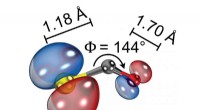
* Hydrogen Bonding: The partially positive hydrogen atoms in one water molecule can form a weak electrostatic attraction with the partially negative oxygen atom of another water molecule. This is known as a hydrogen bond.
* Strong Dipole-Dipole Interactions: The polar nature of water molecules also leads to strong dipole-dipole interactions between them, further contributing to the formation of hydrogen bonds.
In summary:
Water's polarity, high dielectric constant, and ability to form hydrogen bonds allow it to:
* Dissociate ionic bonds: by reducing the electrostatic attraction between ions and surrounding them with hydration shells.
* Form hydrogen bonds: with other water molecules, contributing to its unique properties like high boiling point and surface tension.
These properties make water a powerful solvent and crucial for many biological processes.