* Synthesis: This term means "to create or make" something new.
* Dehydration: This refers to the removal of a water molecule (H2O).
Here's how it works:
1. Monomers: Small individual molecules called monomers are the building blocks.
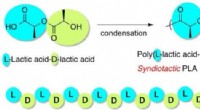
2. Reaction: During dehydration synthesis, a hydroxyl group (OH) is removed from one monomer and a hydrogen atom (H) is removed from another.
3. Water Molecule: The removed OH and H combine to form a water molecule (H2O), which is released.
4. Covalent Bond: The remaining atoms on the monomers form a covalent bond, joining them together.
In essence, two monomers are joined together to form a larger molecule (a polymer) through the removal of a water molecule. This process is called synthesis because you are creating a new, larger molecule.
Example: Think about building a chain. Each link is a monomer, and you connect them by removing a small piece (water) and joining the remaining parts. The final chain is a larger, more complex structure.