1. Energy and Reducing Power:
* ATP: Provides the energy needed to power the Calvin cycle reactions.
* NADPH: Acts as a reducing agent, donating electrons to convert carbon dioxide (CO2) into carbohydrates.
2. The Calvin Cycle:
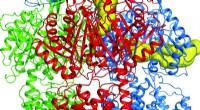
* CO2 Fixation: CO2 is incorporated into an existing 5-carbon molecule called RuBP (ribulose bisphosphate) by the enzyme Rubisco. This forms a 6-carbon compound that quickly breaks down into two 3-carbon molecules (3-PGA).
* Reduction: ATP and NADPH are used to convert 3-PGA into glyceraldehyde 3-phosphate (G3P). This is the key step where carbon is reduced, meaning it gains electrons.
* Regeneration: Most of the G3P is used to regenerate RuBP, allowing the cycle to continue. Some G3P is exported from the cycle to be used for carbohydrate synthesis.
3. Carbohydrate Synthesis:
* G3P: The G3P molecules that are not used to regenerate RuBP are used to build carbohydrates like glucose. Two G3P molecules can be combined to form glucose, which can then be used for energy or as building blocks for other organic molecules.
Summary:
The light-dependent reactions create the energy currency (ATP) and the reducing power (NADPH) that are essential for the light-independent reactions. The Calvin cycle uses these products to fix carbon dioxide and convert it into carbohydrates, using energy from ATP and electrons from NADPH. This process is the foundation of how plants and other photosynthetic organisms produce the food that sustains life on Earth.