Both CO2 and water move in and out of cells through different mechanisms:
CO2:
* Simple Diffusion: CO2 is a small, nonpolar molecule that can easily pass through the cell membrane's lipid bilayer. This movement is driven by the concentration gradient, meaning CO2 moves from areas of high concentration (e.g., inside the cell) to areas of low concentration (e.g., outside the cell).
Water:
* Osmosis: Water moves across the cell membrane through specialized channels called aquaporins. This movement is driven by the difference in water potential (concentration of water) between the inside and outside of the cell.
* Simple Diffusion: Water can also move across the cell membrane through the lipid bilayer itself, although this process is much slower than osmosis.
Here's a breakdown of the processes:
CO2:
1. Cellular Respiration: Inside the cell, CO2 is produced as a byproduct of cellular respiration.
2. Concentration Gradient: The concentration of CO2 is higher inside the cell than outside.
3. Diffusion: CO2 moves down its concentration gradient through the cell membrane.
4. Exhalation: CO2 is ultimately released from the body during exhalation.
Water:
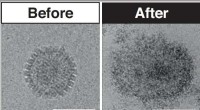
1. Water Potential: The concentration of water inside the cell can be different from the concentration of water outside the cell.
2. Osmosis: Water moves across the cell membrane through aquaporins, driven by the difference in water potential.
3. Water Balance: The movement of water helps maintain the cell's internal water balance and prevents it from bursting or shrinking.
Key Differences:
* CO2: Moves passively by diffusion through the lipid bilayer.
* Water: Primarily moves passively through specialized channels (aquaporins) through osmosis.
Note: Both CO2 and water movement can be influenced by factors like temperature, cell membrane permeability, and the presence of other molecules.
Understanding how CO2 and water move across cell membranes is crucial for understanding various physiological processes, such as cellular respiration, photosynthesis, and water balance.