1. Electrolysis:
* This is the most common method for decomposing water.
* An electric current is passed through water, causing the water molecules to split into hydrogen and oxygen gas.
* The process occurs at electrodes submerged in the water:
* At the cathode (negative electrode), hydrogen ions (H+) gain electrons and form hydrogen gas (H₂).
* At the anode (positive electrode), hydroxide ions (OH-) lose electrons and form oxygen gas (O₂) and water.
2. Thermal Decomposition:
* Water can be decomposed by heating it to very high temperatures.
* This method requires extremely high temperatures (above 2,000°C) and is not practical for large-scale water decomposition.
3. Photolysis:
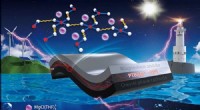
* This process uses light energy, specifically ultraviolet light, to break down water molecules.
* This method is currently being explored for its potential to produce hydrogen fuel using sunlight.
Chemical Equation:
The overall chemical equation for the decomposition of water is:
2H₂O → 2H₂ + O₂
Applications:
* Hydrogen production: Decomposition of water is a key step in producing hydrogen gas, which can be used as a clean fuel source.
* Oxygen production: The oxygen produced during decomposition can be used in various applications, including medical oxygen and rocket fuel.
* Research and development: Understanding the decomposition of water is essential for various scientific and technological advancements, including fuel cell technology and solar energy research.
Conclusion:
The decomposition of water is a fundamental chemical process with various applications. While electrolysis is the most common method, research continues to explore more efficient and sustainable ways to decompose water, paving the way for a cleaner and more energy-efficient future.