Here's why:
* Redox reactions involve the transfer of electrons from one molecule to another.
* Photosynthesis involves the conversion of light energy into chemical energy in the form of glucose. This process relies on the transfer of electrons:
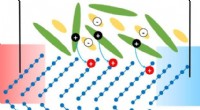
* Light-dependent reactions: Light energy excites electrons in chlorophyll, causing them to move from a lower energy level to a higher energy level. These high-energy electrons are then passed along an electron transport chain, releasing energy that is used to produce ATP and NADPH.
* Light-independent reactions (Calvin Cycle): The electrons carried by NADPH are used to reduce carbon dioxide into glucose. This reduction reaction requires the transfer of electrons.
In summary: Photosynthesis is essentially a complex series of redox reactions that utilize light energy to power the conversion of carbon dioxide and water into glucose and oxygen.