The Electron Transport Chain:
1. Light Absorption: Chlorophyll absorbs light energy, which excites an electron to a higher energy level. This excited electron is then released from the chlorophyll molecule.
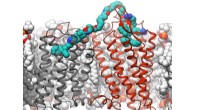
2. Electron Transport: The released electron doesn't just "float away." It is passed along a series of electron carriers (molecules) embedded in the thylakoid membrane within chloroplasts. This chain is called the electron transport chain.
3. Energy Transfer: As the electron moves down the chain, it loses energy. This energy is used to pump protons (H+ ions) across the thylakoid membrane, creating a proton gradient.
4. ATP Production: The proton gradient provides the energy for ATP synthase to produce ATP (adenosine triphosphate), the energy currency of the cell.
Replacing the Lost Electrons:
To keep the electron transport chain running, the lost electrons need to be replaced. This is done through:
* Water Splitting: The enzyme Photosystem II (PSII) splits water molecules, releasing electrons, protons (H+), and oxygen as a byproduct.
* 2H₂O → 4H⁺ + 4e⁻ + O₂
* Electron Donation: These electrons from water splitting are then used to replace those lost by chlorophyll in PSII, thus completing the cycle.
Summary:
The process of replacing the electrons released by chlorophyll is crucial for photosynthesis. Water splitting provides the electrons to replenish the lost ones, and this electron flow fuels the production of ATP, which is essential for powering the reactions that convert carbon dioxide into sugars.