1. Light-dependent reactions: These reactions take place in the thylakoid membranes of chloroplasts and require sunlight. They use light energy to:
* Split water molecules (photolysis), releasing electrons, protons (H+), and oxygen as a byproduct.
* Generate ATP (adenosine triphosphate) through photophosphorylation, using the energy from light.
* Produce NADPH (nicotinamide adenine dinucleotide phosphate) by transferring electrons from the split water molecules.
2. Light-independent reactions (Calvin cycle): These reactions occur in the stroma of chloroplasts and do not require sunlight. They use the ATP and NADPH generated in the light-dependent reactions to:
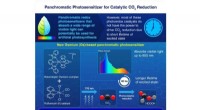
* Fix carbon dioxide from the atmosphere into an organic molecule (glucose).
* Convert the fixed carbon dioxide into glucose through a series of enzymatic reactions.
In summary, the light-dependent reactions convert light energy into chemical energy in the form of ATP and NADPH, while the light-independent reactions use that chemical energy to build glucose from carbon dioxide.