Here's why:
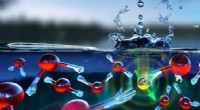
* Polarity: Water molecules have a bent shape with a slightly positive charge on the hydrogen side and a slightly negative charge on the oxygen side. This uneven distribution of charge makes water a polar molecule.
* "Like Dissolves Like": Polar molecules are attracted to other polar molecules, while nonpolar molecules are attracted to other nonpolar molecules. This principle is often summarized as "like dissolves like."
* Dissolving Process: When a polar compound is added to water, the positive ends of water molecules are attracted to the negative ends of the solute molecules, and vice versa. These attractions break apart the solute molecules and allow them to dissolve in the water.
Examples of polar compounds that dissolve well in water:
* Sugars: Glucose, fructose, sucrose
* Salts: Sodium chloride (NaCl), potassium bromide (KBr)
* Acids: Hydrochloric acid (HCl), acetic acid (CH3COOH)
* Alcohols: Ethanol (C2H5OH), methanol (CH3OH)
Examples of nonpolar compounds that do not dissolve well in water:
* Oils: Vegetable oil, olive oil
* Fats: Butter, lard
* Waxes: Beeswax, paraffin wax
* Gases: Nitrogen (N2), oxygen (O2)
Exceptions:
While "like dissolves like" is a good rule of thumb, there are some exceptions. For example, some compounds with large, nonpolar sections can still be slightly soluble in water due to other factors like hydrogen bonding.