Here's a breakdown:
Compounds that dissolve well in water:
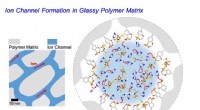
* Ionic compounds: These compounds are made up of charged ions held together by electrostatic forces. Water's polarity allows it to surround the ions and separate them, dissolving the compound. Examples include table salt (NaCl), potassium chloride (KCl), and sodium hydroxide (NaOH).
* Polar covalent compounds: These compounds have uneven sharing of electrons, creating partial positive and negative charges. Water can form hydrogen bonds with these partial charges, helping to dissolve them. Examples include sugar (sucrose), ethanol, and acetic acid.
Compounds that don't dissolve well in water:
* Nonpolar covalent compounds: These compounds have even sharing of electrons, resulting in no partial charges. Water cannot interact with these molecules effectively, so they don't dissolve well. Examples include oils, fats, and gasoline.
Important Note:
* The solubility of a compound is influenced by several factors, including temperature, pressure, and the presence of other substances.
* Some compounds are considered partially soluble in water, meaning they dissolve to a limited extent.
Let me know if you'd like me to explain any of these concepts in more detail!