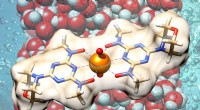
1. Biotechnology: This field combines biology and technology to develop new products and processes. This includes areas like:
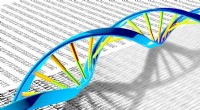
* Genetic Engineering: Modifying genes to create organisms with desirable traits (e.g., disease-resistant crops, pharmaceuticals).
* Bioremediation: Using living organisms to clean up environmental pollution.
* Tissue Engineering: Developing artificial tissues and organs for transplantation.
2. Materials Science: This branch focuses on the properties, processing, and applications of materials, ranging from metals and ceramics to polymers and composites. Key areas include:
* Nanomaterials: Developing materials with unique properties at the nanoscale level (e.g., stronger, lighter, more efficient).
* Biomaterials: Creating materials compatible with biological systems (e.g., artificial bone, contact lenses).
* Electronic Materials: Designing materials for use in electronic devices (e.g., semiconductors, superconductors).
3. Computer Science: This field deals with the theory, design, and application of computers and computational systems. Key areas include:
* Artificial Intelligence (AI): Developing intelligent systems that can perform tasks typically requiring human intelligence.
* Software Engineering: Designing, developing, and maintaining software applications.
* Data Science: Analyzing and interpreting large datasets to extract meaningful insights.
These are just a few examples, and applied science encompasses many other branches, often overlapping with different fields of study.