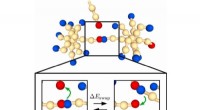
Atom:
* Definition: The basic unit of a chemical element. It's the smallest unit of matter that retains the chemical properties of that element.
* Composition:
* Nucleus: The dense, positively charged center of the atom. Contains protons and neutrons.
* Electron cloud: A region surrounding the nucleus where electrons are found. These electrons are negatively charged and orbit the nucleus.
* Size: Atoms are extremely small, measured in nanometers (1 nanometer = 1 billionth of a meter).
* Overall Charge: Atoms are generally electrically neutral, meaning they have an equal number of protons (positive) and electrons (negative).
Nucleus:
* Definition: The central part of an atom that contains protons and neutrons.
* Composition:
* Protons: Positively charged particles. The number of protons determines the element.
* Neutrons: Neutrally charged particles. The number of neutrons can vary within an element, leading to isotopes.
* Size: The nucleus is even smaller than the atom, occupying a tiny fraction of its volume.
* Charge: The nucleus is positively charged due to the presence of protons.
In simpler terms:
Imagine an atom like a tiny solar system:
* The nucleus is like the sun: It's the dense center and contains the most mass.
* Electrons are like planets: They orbit the nucleus in a cloud.
Key Differences:
* Size: The nucleus is much smaller than the atom.
* Charge: The atom is generally neutral, while the nucleus is positively charged.
* Composition: The atom includes both the nucleus and electrons, while the nucleus contains only protons and neutrons.
Let me know if you'd like any more details or examples!