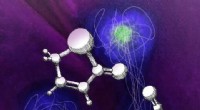
* The same particles: The individual molecules or atoms that make up a liquid are the same ones that make up the gas. They don't change in size.
* Spacing is the key: The difference between a liquid and a gas is primarily about the spacing between these particles. In a liquid, particles are close together and can move around, but they're still relatively close. In a gas, the particles are much farther apart, moving freely in all directions.
* Increased energy: When a liquid turns into a gas (evaporates), the particles absorb energy, causing them to move faster and spread out. This increased kinetic energy overcomes the attractive forces holding them together in a liquid state.
Think of it this way: Imagine a crowd of people standing close together in a room. This represents a liquid. Now imagine those same people spreading out, moving around freely, and taking up much more space. This is similar to a gas. The individual people (particles) haven't changed size, but they are occupying a much larger volume.