* In a liquid: Molecules are in constant motion, moving past each other freely. They have more kinetic energy, leading to a greater average distance between them.
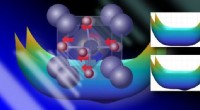
* During freezing: As the temperature drops, the molecules lose kinetic energy and slow down. This causes the attractive forces between molecules to become more dominant. The molecules begin to arrange themselves in a more ordered, crystalline structure.
* In a solid (frozen state): The molecules are now tightly packed in a fixed, repeating arrangement. They vibrate in place, but their movement is much more restricted. The molecules have less kinetic energy than they did in the liquid state.
Essentially, the molecules go from a state of random movement to a state of ordered vibration. This reduced molecular motion is the reason solids have a fixed shape and volume, unlike liquids.