Solids
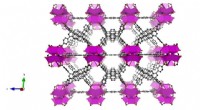
* Arrangement: Particles are tightly packed in a fixed, regular arrangement, forming a crystal lattice.
* Movement: Particles vibrate in place, but they don't move around freely.
* Spacing: Particles are very close together.
* Shape & Volume: Solids have a definite shape and volume.
Liquids
* Arrangement: Particles are closely packed, but they're not in a fixed, regular arrangement. They have more freedom to move around.
* Movement: Particles are constantly moving and colliding with each other.
* Spacing: Particles are a bit further apart than in solids, allowing them to slide past each other.
* Shape & Volume: Liquids have a definite volume but take the shape of their container.
Here's a simple analogy:
Think of solids as a tightly packed group of people standing shoulder-to-shoulder. They can vibrate and move a little, but they can't easily move past each other.
Liquids are like a crowded dance floor. People are still close, but they can move around, dance, and bump into each other. They're not rigidly fixed in one spot.
Key Differences
* Particle arrangement: Fixed and regular in solids; less rigid and more fluid in liquids.
* Movement: Vibrations only in solids; movement and collisions in liquids.
* Spacing: Closer in solids; slightly further apart in liquids.
* Shape: Definite in solids; takes the shape of the container in liquids.
Let me know if you'd like more details on any of these points!