Possible Interpretations:
* Resonance in Molecular Systems: The term "resonance" in chemistry refers to the delocalization of electrons in molecules, leading to structures that are hybrids of multiple contributing forms. It's possible the term is used in a specific context, such as a device that utilizes this phenomenon for a particular purpose.
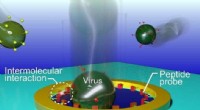
* Devices that interact with molecules: There are various devices that can interact with molecules on a microscopic level. For example:
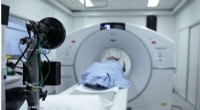
* Nuclear Magnetic Resonance (NMR) Spectrometers: These machines use magnetic fields to excite nuclei in molecules, providing information about their structure and dynamics.
* Mass Spectrometers: These instruments measure the mass-to-charge ratio of ions, enabling identification and quantification of molecules.
* Raman Spectrometers: These devices use inelastic scattering of light to provide vibrational spectra of molecules, which can reveal information about their structure and bonding.
Lack of Clear Definition:
Without more context, it's impossible to give a precise definition of a "molecular resonance generator." If you encountered this term in a specific source, please provide more context so I can help you understand what it might refer to.
It's important to be cautious when encountering unfamiliar scientific terminology, especially when the term doesn't have a widely accepted definition. Always consider the source and try to understand the context in which the term is used.