1. Solids
* Definition: Solids have a fixed shape and volume. Their particles are tightly packed together in a regular, repeating pattern.
* Key Properties:
* Rigid: They resist changes in shape.
* Incompressible: They don't easily compress.
* High density: Particles are closely packed.
* Definite volume: They occupy a specific amount of space.
* Definite shape: They maintain their shape unless acted upon by an external force.
* Examples: Ice, rock, metal, wood
2. Liquids
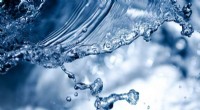
* Definition: Liquids have a fixed volume but take the shape of their container. Their particles are close together but can move around.
* Key Properties:
* Fluid: They can flow.
* Incompressible: They resist compression but not as strongly as solids.
* High density: Particles are close together, though less so than in solids.
* Definite volume: They occupy a specific amount of space.
* Indefinite shape: They take the shape of their container.
* Examples: Water, oil, mercury
3. Gases
* Definition: Gases have no fixed shape or volume. Their particles are far apart and move freely.
* Key Properties:
* Fluid: They can flow easily.
* Compressible: They can be compressed easily.
* Low density: Particles are widely spaced.
* Indefinite volume: They expand to fill their container.
* Indefinite shape: They take the shape of their container.
* Examples: Air, oxygen, helium
4. Plasma
* Definition: Plasma is often called the "fourth state of matter." It's a superheated gas where electrons are stripped away from atoms, creating a mix of ions and free electrons.
* Key Properties:
* Conductive: It conducts electricity.
* Ionized: Atoms are partially or completely ionized.
* Electromagnetic: It responds strongly to magnetic fields.
* Examples: Lightning, the sun, fluorescent lights, neon signs
Key Differences:
* Particle arrangement and motion: The main difference lies in how closely spaced the particles are and how freely they can move.
* Shape and volume: Solids have fixed shapes and volumes, liquids have fixed volumes but variable shapes, and gases have variable shapes and volumes.
* Compressibility: Solids are generally incompressible, liquids are slightly compressible, and gases are highly compressible.
Let me know if you'd like more details on any of these states of matter!