Kinetics is the branch of physical chemistry that studies the rates and mechanisms of chemical reactions. It focuses on:
* Reaction rates: How fast a reaction proceeds, measured by the change in concentration of reactants or products over time.
* Reaction mechanisms: The step-by-step process by which a reaction occurs, including the formation of intermediates and transition states.
* Factors affecting reaction rates: Temperature, concentration, catalysts, surface area, and other variables that influence how quickly a reaction progresses.
In essence, kinetics investigates the dynamics of chemical change, focusing on how fast and how a reaction happens.
Here are some key concepts within kinetics:
* Rate law: A mathematical equation describing the relationship between reaction rate and reactant concentrations.
* Activation energy: The minimum amount of energy required for a reaction to occur.
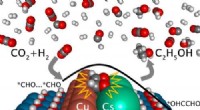
* Catalyst: A substance that speeds up a reaction without being consumed in the process.
* Equilibrium: The state where the rates of the forward and reverse reactions are equal.
Kinetics has applications in various fields, including:
* Chemical engineering: Designing and optimizing chemical processes.
* Materials science: Understanding and controlling material properties.
* Biochemistry: Studying enzyme activity and metabolic pathways.
* Environmental science: Analyzing chemical reactions in the environment.
By understanding kinetics, we can predict and manipulate the behavior of chemical reactions, leading to advancements in diverse fields.