Everyday Examples:
* Frost: Water vapor in the air directly changes into ice crystals on surfaces below freezing, forming frost.
* Snow: Water vapor in clouds directly changes into ice crystals, forming snowflakes.
* Dry ice: Solid carbon dioxide, formed by compressing and cooling carbon dioxide gas. It sublimates (goes directly from solid to gas) at room temperature, hence its use for creating fog effects.
Industrial and Scientific Examples:
* Freeze-drying: This process removes water from food or other materials by freezing them and then placing them in a vacuum chamber. The ice sublimates, leaving the solid material behind.
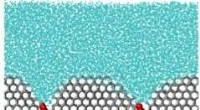
* Thin-film deposition: In electronics manufacturing, gases like silicon and germanium can be deposited onto a substrate as thin films. This is done by heating the gas and allowing it to condense onto the substrate.
* Cryogenic freezing: Extremely low temperatures can be used to solidify gases like nitrogen, oxygen, and helium. These liquid and solid forms are used in various applications, like medical cryosurgery.
Key Points:
* Deposition is the opposite of sublimation, where a solid changes directly to a gas.
* Cooling is the primary factor in causing a gas to solidify.
* Pressure can also play a role, as seen in the case of dry ice.
Let me know if you have any other questions!