* Oxidation: The loss of electrons by a chemical species.
* Reduction: The gain of electrons by a chemical species.
Oxidation and reduction always occur together in a process called redox reaction.
Examples of Reactions Producing Electrons:
1. Electrolysis: The process of using an electric current to drive non-spontaneous chemical reactions. For example, electrolysis of water:
```
2H₂O(l) → 2H₂(g) + O₂(g)
```
At the anode (positive electrode), water molecules are oxidized, releasing electrons:
```
2H₂O(l) → O₂(g) + 4H⁺(aq) + 4e⁻
```
2. Combustion: The rapid reaction between a substance with an oxidant, usually oxygen, producing heat and light. For instance, burning methane:
```
CH₄(g) + 2O₂(g) → CO₂(g) + 2H₂O(g)
```
Methane is oxidized, releasing electrons to form carbon dioxide and water.
3. Corrosion: The gradual deterioration of a material due to chemical reactions with its environment. For example, rusting of iron:
```
4Fe(s) + 3O₂(g) + 6H₂O(l) → 4Fe(OH)₃(s)
```
Iron is oxidized, releasing electrons to form iron(III) hydroxide (rust).
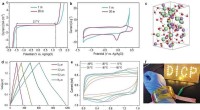
4. Battery reactions: In a battery, electrons are produced at the anode (negative electrode) through an oxidation reaction. These electrons then flow through the external circuit to the cathode (positive electrode).
Important Note: While the term "producing electrons" is commonly used, it's important to remember that electrons are not actually created in these reactions. They are simply transferred from one species to another.