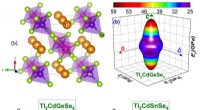
Here's a more detailed explanation:
* Nucleus: The positively charged nucleus of an atom contains protons and neutrons.
* Electron Cloud: The electron cloud is the space surrounding the nucleus where electrons are found. It's not a definite orbit like planets around the sun, but rather a region where electrons are most likely to be found.
* Electron Shells: Within the electron cloud, electrons are arranged in different energy levels called electron shells. Each shell corresponds to a different distance from the nucleus and energy level.
* Subshells and Orbitals: Each electron shell can be further subdivided into subshells, which are characterized by different shapes. Each subshell is then further subdivided into orbitals, which represent specific regions of space where an electron has the highest probability of being found.
Here's an analogy: Imagine a fuzzy ball of yarn representing the electron cloud. The nucleus is at the center, and the yarn strands represent the different energy levels and regions where electrons are likely to be found.
Important points to remember:
* Electrons are constantly moving within the electron cloud.
* The exact location of an electron at any given moment cannot be determined with certainty.
* The probability of finding an electron in a particular region of space is described by the electron cloud model.
It's helpful to think of the electron cloud as a "fuzzy" region of space where electrons exist, rather than a defined orbit. This understanding helps us better grasp the concept of electron behavior in atoms.