The three primary states of matter, solids, liquids, and gases, are differentiated by their distinct properties arising from the arrangement and movement of their constituent particles.
1. Solids:
* Shape: Definite and fixed.
* Volume: Definite and fixed.
* Density: High due to tightly packed particles.
* Compressibility: Very low, particles cannot be squeezed closer.
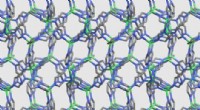
* Particle arrangement: Highly ordered, fixed positions in a lattice structure.
* Particle movement: Vibrate about fixed positions.
Examples: Ice, rock, steel, wood
2. Liquids:
* Shape: Takes the shape of its container.
* Volume: Definite, but can slightly change with pressure.
* Density: Generally less than solids, but higher than gases.
* Compressibility: Slightly compressible, particles can be squeezed closer but not significantly.
* Particle arrangement: Less ordered than solids, but still close together.
* Particle movement: Flow past each other, but stay relatively close together.
Examples: Water, oil, honey, mercury
3. Gases:
* Shape: Takes the shape of its container.
* Volume: Indefinite, expands to fill its container.
* Density: Very low due to widely spaced particles.
* Compressibility: Highly compressible, particles can be squeezed much closer together.
* Particle arrangement: Random and widely spaced.
* Particle movement: Move freely in all directions, collide frequently.
Examples: Air, oxygen, helium, carbon dioxide
Differences and Key Properties:
| Property | Solid | Liquid | Gas |
|---|---|---|---|
| Shape | Definite | Takes the shape of container | Takes the shape of container |
| Volume | Definite | Definite | Indefinite |
| Density | High | Medium | Low |
| Compressibility | Low | Slight | High |
| Particle arrangement | Ordered, fixed | Less ordered, close together | Random, widely spaced |
| Particle movement | Vibrate in place | Flow past each other | Move freely in all directions |
Further Differences:
* Diffusion: Gases diffuse much faster than liquids, and liquids diffuse faster than solids due to the greater freedom of movement in gases.
* Surface tension: Liquids have a surface tension due to the attraction between their molecules, which causes them to form droplets and resist deformation. Solids do not exhibit surface tension.
Transition between States:
The state of matter can change due to changes in temperature and pressure. For example, heating ice (solid) turns it into water (liquid) and further heating turns it into steam (gas).
Key Takeaway:
The differences between solids, liquids, and gases are primarily determined by the arrangement and movement of their constituent particles. These differences manifest in their physical properties, such as shape, volume, density, and compressibility.