Conduction is the transfer of heat energy through direct contact between particles. It's like a chain reaction, where energy is passed from one particle to the next. Here's how it works:
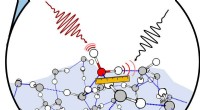
1. Vibrating Atoms: All matter is made of atoms, and these atoms are constantly vibrating. The hotter the object, the faster its atoms vibrate.
2. Collision and Energy Transfer: When a hot object comes into contact with a colder object, the faster-vibrating atoms in the hot object collide with the slower-vibrating atoms in the colder object. During this collision, some of the kinetic energy of the hot atoms is transferred to the colder atoms.
3. Chain Reaction: The colder atoms, now with more energy, start vibrating faster. This increased vibration causes them to collide with their neighboring atoms, transferring energy to them. This process continues down the chain, effectively transferring heat energy from the hotter region to the colder region.
Key Points:
* Direct Contact: Conduction requires direct physical contact between objects.
* Vibrational Energy: The energy transferred is in the form of kinetic energy, primarily from the vibrations of atoms.
* Temperature Gradient: Conduction occurs from a region of higher temperature to a region of lower temperature.
Examples of Conduction:
* Holding a hot cup of coffee: Heat is transferred from the cup to your hand through conduction.
* Cooking on a stove: Heat from the stovetop burner is transferred to the pan through conduction.
* Heating a metal rod: When one end of a metal rod is heated, the heat is conducted to the other end.
Factors Affecting Conduction:
* Material: Different materials have different abilities to conduct heat. Metals are excellent conductors, while materials like wood and plastic are poor conductors (good insulators).
* Temperature Difference: The larger the temperature difference between two objects, the faster the rate of heat transfer.
* Surface Area: A larger surface area in contact increases the rate of heat transfer.
* Thickness: Thicker objects resist heat transfer more than thinner objects.
Understanding how heat is transferred through conduction is essential for understanding many real-world phenomena, from how our homes are heated to how heat engines work.