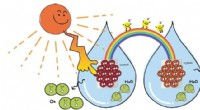
* Fusion: Two light atomic nuclei combine to form a heavier nucleus. In the process, some mass is converted into energy, which is released. This is the process that powers stars, including our Sun.
* Fission: A heavy atomic nucleus is split into two or more lighter nuclei. This splitting releases energy as well. This is the process used in nuclear power plants.
While both processes release energy, there are key differences between them:
* Fuel: Fusion uses light nuclei (like hydrogen isotopes), while fission uses heavy nuclei (like uranium).
* Conditions: Fusion requires extremely high temperatures and pressures, while fission can happen at relatively lower temperatures.
* Waste: Fusion produces relatively clean byproducts, primarily helium, while fission produces radioactive waste.
Both fusion and fission are powerful energy sources, but they have different advantages and disadvantages.