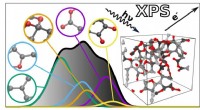
* Water: Water molecules (H₂O) are polar. This means they have a slightly positive end and a slightly negative end due to the arrangement of their hydrogen and oxygen atoms. This polarity allows water molecules to form strong hydrogen bonds with each other, creating a tightly packed structure.
* Petrol: Petrol is a mixture of hydrocarbons, which are nonpolar. These molecules are made up of mostly carbon and hydrogen atoms, which share electrons more evenly. This lack of polarity means hydrocarbon molecules have weaker intermolecular forces (primarily van der Waals forces) holding them together.
Density and Molecular Forces:
* Density is a measure of how much mass is packed into a given volume.
* Stronger intermolecular forces lead to tighter packing of molecules, resulting in higher density.
In summary: Water's strong hydrogen bonds create a denser structure than the weaker forces between hydrocarbon molecules in petrol. This difference in density is why petrol floats on water.