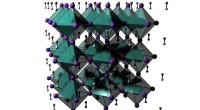
* Spacing of molecules: In solids, molecules are tightly packed and arranged in a regular, rigid structure. In liquids, molecules are more loosely packed and can move around, though they're still close together.
* Compressibility: Solids are relatively incompressible, meaning you can't squeeze them much. Liquids are more compressible, allowing their molecules to be packed closer together under pressure.
Exceptions:
* Water: Water is an exception, as its solid form (ice) is less dense than its liquid form. This is due to the hydrogen bonds between water molecules creating a more open, crystalline structure in ice.
* Other substances: A few other substances, like bismuth and silicon, also have a higher density in their liquid form compared to their solid form.
Here's a simple analogy:
Imagine a box full of marbles (representing molecules).
* Solid: The marbles are tightly packed and don't move much.
* Liquid: The marbles can move around but are still close together.
The box with the marbles closely packed (solid) would have a higher density than the box with the marbles loosely packed (liquid).