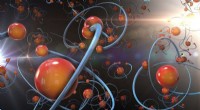
* Homogeneous Mixture: A mixture where the components are evenly distributed and the mixture has a uniform composition throughout.
* Heterogeneous Mixture: A mixture where the components are not evenly distributed and the mixture has a non-uniform composition.
Why air is homogeneous:
* Gases mix easily: The gases that make up air (nitrogen, oxygen, argon, etc.) readily mix and distribute evenly.
* Uniform composition (macroscopically): Although the composition of air can vary slightly depending on location, altitude, and other factors, on a macroscopic level, it appears uniform. You can't see distinct layers or particles of different gases.
However, air can be considered heterogeneous at the molecular level:
* Molecular scale: While the gases are evenly distributed, the individual molecules of each gas are not perfectly arranged. There will be some variations in the concentration of each gas at the molecular level.
* Microscopic level: Dust, pollen, and other particles can be suspended in air, making it heterogenous at a microscopic scale.
In summary: Air is considered a homogeneous mixture because its components are evenly distributed on a macroscopic level, making it appear uniform. However, it can be considered heterogeneous at the molecular or microscopic level due to variations in the concentration of gases and the presence of suspended particles.