1. Dissolving Salt:
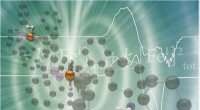
* Ionic Compounds: Table salt is an ionic compound, meaning it's formed by the electrostatic attraction between positively charged sodium ions (Na+) and negatively charged chloride ions (Cl-).
* Water as a Solvent: Water is a polar solvent, meaning its molecules have a slightly positive end and a slightly negative end. This polarity allows water molecules to surround and attract the charged ions in salt.
* Dissociation: The water molecules pull the Na+ and Cl- ions apart, breaking the ionic bonds that held them together in the salt crystal. These ions are now free to move around in the water.
2. Creating a Conductive Pathway:
* Mobile Charge Carriers: The dissolved Na+ and Cl- ions in the water become mobile charge carriers. They can move freely throughout the solution.
* Electrical Current: When an electrical potential (a voltage) is applied across the salt solution, the ions respond:
* Positive Na+ ions move towards the negative electrode (cathode).
* Negative Cl- ions move towards the positive electrode (anode).
* Flow of Charge: This movement of ions constitutes an electrical current. The solution is now able to conduct electricity.
In summary:
* The dissolving of salt in water creates free-moving ions.
* These ions act as charge carriers, allowing for the flow of electricity when a voltage is applied.
Important Note: Pure water itself is a very poor conductor of electricity. It's the presence of dissolved ions (like those from salt) that makes the solution conductive.