1. Reduced Energy and Motion:
* In a liquid, molecules have a higher energy level and are moving around freely, constantly bumping into each other.
* As the substance cools, the molecules lose energy. This causes them to move slower and vibrate less.
2. Closer Packing and Ordering:
* With less energy, the attractive forces between the molecules become more dominant.
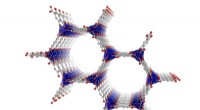
* These forces cause the molecules to arrange themselves in a more ordered and structured pattern, typically a crystal lattice.
* The molecules pack closer together, reducing the spaces between them.
3. Fixed Positions and Vibrations:
* In a solid state, the molecules are essentially locked in place within the crystal lattice. They can still vibrate, but they can no longer move freely throughout the substance.
* This fixed position gives solids their rigid shape and volume.
Key Differences:
* Liquid: Molecules are close but can move around.
* Solid: Molecules are tightly packed in a fixed, ordered arrangement.
Example:
Imagine a crowd of people at a party. In a liquid state, they are moving freely, bumping into each other. As the party winds down, people start to get tired and move less. They might start to form groups and stand closer together (like molecules in a solid).
Let me know if you'd like to dive deeper into specific types of solids or other aspects of the liquid-solid transition!