Basic containers:
* Beakers: These are cylindrical containers with a spout, commonly used for mixing, heating, and transferring liquids. They come in various sizes and are often graduated (marked with volume measurements).
* Erlenmeyer flasks: These are conical flasks with a narrow neck, ideal for swirling and mixing liquids without spillage. They are also useful for storing liquids, particularly when using a stopper.
* Graduated cylinders: These are tall, cylindrical containers with markings that indicate specific volumes, used for accurate measurement of liquids.
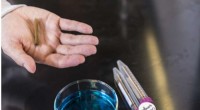
* Test tubes: These are small, cylindrical tubes with a round bottom, commonly used for holding and observing small samples of liquids in experiments.
* Vials: These are small, sealed containers used for storing and transporting small quantities of liquids.
Specialized containers:
* Burettes: These are long, graduated tubes with a stopcock at the bottom, used for dispensing precise volumes of liquids during titrations.
* Dropper bottles: These are bottles with a dropper attached, used for dispensing small, controlled volumes of liquids.
* Pipettes: These are narrow tubes used for transferring precise volumes of liquids. There are various types of pipettes, including volumetric pipettes (for specific volumes), graduated pipettes (for variable volumes), and micropipettes (for very small volumes).
* Flasks: There are various types of flasks used for different purposes, including round-bottom flasks (for heating liquids), volumetric flasks (for preparing solutions with specific concentrations), and Erlenmeyer flasks (mentioned above).
The specific container used depends on the nature of the experiment, the volume of liquid, the required accuracy, and other factors.