1. Changes in Atomic Nuclei:
* Change in Atomic Number: The number of protons in the nucleus can change, leading to a transformation of one element into another. This is the basis of nuclear transmutation.
* Change in Mass Number: The number of neutrons can also change, affecting the mass number of the atom.
* Release or Absorption of Energy: Nuclear reactions are accompanied by a large release or absorption of energy, often in the form of gamma rays or high-energy particles. This is due to the difference in binding energy between the initial and final nuclei.
* Formation of New Isotopes: Nuclear reactions can create new isotopes of existing elements, with different neutron counts.
2. Emission of Radiation:
* Alpha Particles: These are composed of two protons and two neutrons, effectively helium nuclei.
* Beta Particles: These are high-energy electrons or positrons emitted from the nucleus.
* Gamma Rays: These are high-energy photons, carrying no charge or mass, emitted from the nucleus.
* Neutrinos: These are nearly massless particles with no charge, often produced in beta decay.
3. Other Changes:
* Changes in Chemical Properties: The transformation of one element into another fundamentally alters the chemical properties of the atom.
* Formation of New Compounds: The release of energy or new elements can lead to the formation of new compounds that were not present before the reaction.
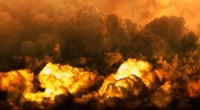
* Heat and Light Generation: Nuclear reactions often release significant amounts of heat and light, which can be harnessed for energy production.
Examples:
* Nuclear Fission: The splitting of a heavy nucleus (like uranium) into lighter nuclei, releasing energy and neutrons.
* Nuclear Fusion: The joining of light nuclei (like hydrogen) to form heavier nuclei, releasing enormous energy.
* Radioactive Decay: The spontaneous breakdown of an unstable nucleus, emitting particles and energy.
Key Points:
* Nuclear reactions are fundamentally different from chemical reactions, which involve only the rearrangement of electrons.
* Nuclear reactions are characterized by large energy changes and the formation of new elements or isotopes.
* Nuclear reactions have significant applications in power generation, medicine, and research.