General:
* Atomic Number: 84
* Atomic Mass: 209 u
* Electron Configuration: [Xe] 4f14 5d10 6s2 6p4
* Density: 9.32 g/cm3 (at 20°C)
* Melting Point: 254 °C (527 °F)
* Boiling Point: 962 °C (1764 °F)
* Appearance: Silvery-gray, brittle, radioactive solid
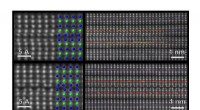
* Crystal Structure: Simple cubic
Other notable properties:
* Radioactivity: Highly radioactive, emitting alpha particles. It has a half-life of 138.37 days for the most common isotope, 210Po.
* Toxicity: Extremely toxic, even in trace amounts, due to its radioactivity.
* Volatility: Polonium is volatile, particularly at its melting point.
* Conductivity: Poor conductor of heat and electricity.
* Solubility: Soluble in acids, but not in water.
* Allotropy: Exists in two allotropes, alpha and beta, which differ in their crystal structures.
Additional notes:
* The physical properties of polonium are influenced by its radioactivity.
* Its high radioactivity makes it difficult to study and handle safely.
* Due to its rarity and toxicity, polonium has limited applications.
Applications:
* Static eliminator: Used in devices to eliminate static electricity, especially in industrial settings.
* Nuclear research: Used as a source of alpha particles for research purposes.
* Heat source: Due to its high radioactivity, it can be used as a heat source in thermoelectric generators.
Safety considerations:
* Polonium is extremely hazardous due to its radioactivity. Exposure to it can cause severe health effects, including radiation sickness and cancer.
* Proper handling and safety protocols are crucial when working with polonium.
Please note that this information is for general knowledge only. Always consult reliable sources and safety guidelines before handling any radioactive materials.