Here's a breakdown:
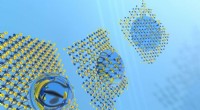
* Solids: Solids have a rigid structure and their particles are closely packed. This allows for the transmission of both mechanical waves (like sound waves) and electromagnetic waves (like light).
* Mechanical waves travel through solids by vibrating the particles, which then transfer energy to their neighbors.
* Electromagnetic waves can pass through transparent solids like glass.
* Liquids: Liquids have a more fluid structure than solids, with particles that can move around more freely. Liquids can transmit mechanical waves like sound.
* Electromagnetic waves can also pass through transparent liquids.
* Gases: Gases have the loosest structure of the three, with particles spread far apart. They can also transmit mechanical waves like sound.
* Electromagnetic waves can pass through gases as well.
Important Note: While solids, liquids, and gases can transmit waves, the speed and behavior of the waves can vary significantly depending on the medium. For example, sound travels much faster in solids than in liquids or gases.