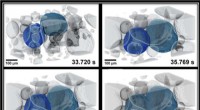
1. Austenite Formation:
* Heating to the Austenitic Range: When steel is heated to a specific temperature range (typically between 723°C and 912°C for plain carbon steels), the iron atoms rearrange themselves into a face-centered cubic (FCC) crystal structure called Austenite.
* Carbon Dissolution: At this temperature, the carbon atoms dissolve into the iron lattice, forming a solid solution. This means the carbon atoms are distributed evenly throughout the iron, making the steel more malleable and ductile.
2. Quenching:
* Rapid Cooling: After reaching the austenitic state, the steel is rapidly cooled, often by plunging it into water, oil, or another quenching medium. This rapid cooling prevents the carbon atoms from diffusing out of the iron lattice.
* Martensite Formation: The rapid cooling traps the carbon atoms in the FCC structure, transforming the Austenite into a highly distorted body-centered tetragonal (BCT) crystal structure called Martensite. This process happens very quickly and often results in a significant increase in hardness and strength.
3. Tempering:
* Heating to a Lower Temperature: The tempered steel is then reheated to a lower temperature, typically between 150°C and 650°C. This process is called "tempering."
* Martensite Decomposition: During tempering, the Martensite starts to decompose, with some of the carbon atoms diffusing out of the iron lattice and forming small carbide particles (Fe3C) within the steel.
* Stress Relief: The internal stresses caused by the rapid cooling process during quenching are relieved during tempering.
* Microstructure Modification: Tempering also changes the size, shape, and distribution of the carbide particles. The microstructure of the steel becomes more stable and less brittle.
4. Property Changes:
* Reduced Hardness: Tempering results in a decrease in hardness compared to the quenched state.
* Increased Toughness and Ductility: Tempering improves the toughness and ductility of the steel, making it more resistant to cracking and fracture.
* Improved Machinability: Tempering also improves the machinability of steel, making it easier to cut and shape.
In Summary:
Tempering steel is a process that alters the microstructure of the steel by controlling the rate of cooling and the temperature of the heat treatment. This process results in changes in the properties of the steel, making it suitable for various applications.