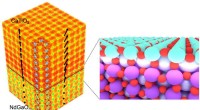
1. Solid Phase: The solid is in its initial, rigid state. The particles are closely packed and vibrate in fixed positions.
2. Melting: As heat is added, the particles vibrate faster and break free from their fixed positions. This is the melting point, where the solid transitions to a liquid.
3. Liquid Phase: The particles are now moving freely and can slide past each other.
4. Boiling: As more heat is added, the particles gain enough energy to overcome the attractive forces holding them together in the liquid state. This is the boiling point, where the liquid transitions to a gas.
5. Gas Phase: The particles are now widely spaced and move freely and independently.
Important Note: This is a simplified explanation. The actual transitions can be more complex depending on the type of solid and the pressure involved. For example, some solids can sublime directly from a solid to a gas without going through a liquid phase.