* Evaporation: Molecules in the liquid state possess a range of kinetic energies. Those with enough energy overcome the intermolecular forces holding them in the liquid and escape into the gas phase. This is the process of evaporation.
* Condensation: Gas molecules in the vapor phase collide with the liquid surface. If they lose enough kinetic energy, they become trapped by the intermolecular forces and become part of the liquid phase. This is condensation.
Equilibrium:
When the rate of evaporation equals the rate of condensation, the system is in equilibrium. This means that the net change in the number of molecules in each phase is zero. It's important to note that this doesn't mean there's an equal number of molecules in each phase, just that the number in each phase remains constant.
Factors Affecting Equilibrium:
* Temperature: Increasing temperature increases the kinetic energy of molecules, favoring evaporation and shifting the equilibrium towards the vapor phase.
* Pressure: Increasing pressure forces more gas molecules into the liquid phase, shifting the equilibrium towards the liquid phase.
* Intermolecular forces: Stronger intermolecular forces in the liquid phase make it more difficult for molecules to escape into the vapor phase, shifting the equilibrium towards the liquid phase.
Visualizing the process:
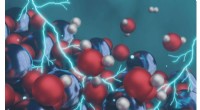
Imagine a closed container with water. Water molecules are constantly moving and colliding. Some molecules at the surface have enough energy to break free and become water vapor. At the same time, water vapor molecules in the air collide with the surface and some stick, returning to the liquid phase. When the rates of these two processes become equal, the system is in equilibrium.
In summary, liquid-vapor equilibrium is a dynamic balance between the processes of evaporation and condensation, where the rate of each process is equal. This state represents a constant exchange of molecules between the liquid and vapor phases, even though the overall amounts in each phase remain stable.