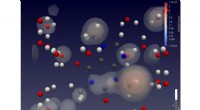
* State of matter: Water vapor is a gas, meaning the molecules are far apart and move freely at high speeds. Liquid water molecules are much closer together and have restricted movement.
* Kinetic energy: The average kinetic energy of molecules is directly related to temperature. When water vapor condenses, it releases heat (exothermic process). This heat loss causes the average kinetic energy of the water molecules to decrease, resulting in slower movement.
* Intermolecular forces: In the gaseous state, intermolecular forces (like hydrogen bonds) are weak. However, in liquid water, these forces are much stronger, holding the molecules closer together and limiting their movement.
In essence, condensation is a process where molecules lose energy and slow down, transitioning from a high-energy, free-moving gas state to a lower-energy, more restricted liquid state.