Here's a breakdown of the types of intermolecular forces:
* Van der Waals forces: These are weak, short-range forces that arise from temporary fluctuations in electron distribution around molecules. They are further divided into:
* London dispersion forces: Present in all molecules, but stronger in larger molecules.
* Dipole-dipole forces: Occur between polar molecules with permanent dipoles.
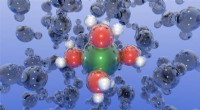
* Hydrogen bonding: A special type of dipole-dipole interaction where a hydrogen atom is bonded to a highly electronegative atom (like oxygen, nitrogen, or fluorine).
* Ionic forces: These occur between oppositely charged ions, which can be present in different substances or within the same substance. They are much stronger than Van der Waals forces.
The strength of these intermolecular forces depends on several factors, including:
* Type of force: Hydrogen bonding is the strongest, followed by dipole-dipole forces, and then London dispersion forces.
* Polarity of the molecules: Polar molecules exhibit stronger intermolecular forces.
* Size and shape of the molecules: Larger and more complex molecules have greater surface area and therefore stronger London dispersion forces.
In summary:
The attractive force between two bodies of different substances is due to intermolecular forces, which are primarily influenced by the type of force, polarity of the molecules, and size and shape of the molecules.