Here's why:
* Ionic Compound: Copper(II) sulfate is an ionic compound, meaning it's formed by the electrostatic attraction between positively charged copper ions (Cu²⁺) and negatively charged sulfate ions (SO₄²⁻). These strong electrostatic forces require a lot of energy to overcome, leading to high melting points.
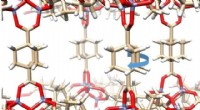
* Strong Lattice Structure: The ionic bonds in copper(II) sulfate create a rigid crystal lattice structure. This structure requires significant energy to break apart, further contributing to the high melting point.
Melting point of copper(II) sulfate:
* Anhydrous CuSO₄: 560 °C (1040 °F)
* Hydrated CuSO₄·5H₂O (copper(II) sulfate pentahydrate): 110 °C (230 °F)
As you can see, the anhydrous form has a much higher melting point than the hydrated form. This is because the water molecules in the hydrated form disrupt the lattice structure and weaken the ionic bonds.
Therefore, copper(II) sulfate does indeed have a high melting point, especially in its anhydrous form.