1. Solids
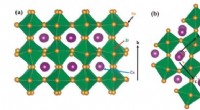
* Molecular Arrangement: Molecules in solids are tightly packed together in a regular, repeating pattern called a crystal lattice.
* Movement: Molecules in solids vibrate in fixed positions. They don't move around freely. The vibrations are rapid and constant, but their amplitude (how far they move) is relatively small.
* Key Characteristics: Solids have a fixed shape and volume. They are incompressible (difficult to squeeze) due to the close packing of their molecules.
2. Liquids
* Molecular Arrangement: Molecules in liquids are closer together than in gases, but they are not as tightly packed as in solids. They have some degree of order but are free to move around.
* Movement: Molecules in liquids can move around more freely than in solids. They have a greater vibrational amplitude and can slide past each other. This gives liquids the ability to flow.
* Key Characteristics: Liquids take the shape of their container but have a fixed volume. They are relatively incompressible.
3. Gases
* Molecular Arrangement: Molecules in gases are widely spaced and move freely. There is little order or regularity in their arrangement.
* Movement: Molecules in gases have high kinetic energy, moving rapidly in random directions. They collide with each other and the walls of their container. The distance between collisions is much greater than in liquids or solids.
* Key Characteristics: Gases take the shape and volume of their container. They are highly compressible due to the large spaces between molecules.
Important Note:
The movement of molecules in each state is not absolute. There is always some degree of movement in all states of matter. For example, even in solids, some molecules have enough energy to escape from their fixed positions and move into the liquid state. This process is called sublimation.
Think of it like this:
* Solids: Imagine a crowded dance floor, people can barely move but they vibrate constantly.
* Liquids: Imagine a group of friends at a party, they can move around but are still relatively close together.
* Gases: Imagine a swarm of bees flying freely in a large room, they can move in any direction and are far apart.