1. Dissociation: The ionic compound copper sulfate breaks apart into its constituent ions:
* Cu2+ (copper(II) ions) - These are responsible for the blue color of the solution.
* SO42- (sulfate ions) - These are colorless.
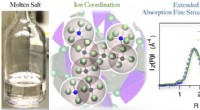
2. Hydration: The ions become surrounded by water molecules. The partially negative oxygen atoms of water molecules are attracted to the positively charged copper ions, and the partially positive hydrogen atoms of water molecules are attracted to the negatively charged sulfate ions. This process is called hydration.
3. Formation of an aqueous solution: The hydrated ions are dispersed throughout the water, forming a homogeneous solution.
Overall reaction:
CuSO4(s) + H2O(l) → [Cu(H2O)n]2+(aq) + [SO4(H2O)m]2-(aq)
Where 'n' and 'm' represent the number of water molecules hydrating the copper and sulfate ions, respectively.
Key Observations:
* The solution turns blue due to the presence of hydrated copper(II) ions.
* The solution becomes slightly acidic as the sulfate ions react with water to a small extent, releasing hydrogen ions (H+).
Note: The dissolution process is exothermic, meaning heat is released, and the solution becomes slightly warmer.