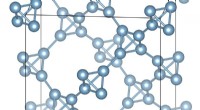
* Solid State: In a solid, particles are tightly packed together and vibrate in fixed positions. The attractive forces between the particles are strong.
* Adding Heat: When heat is added to a solid, the particles absorb energy and start vibrating more vigorously.
* Breaking Bonds: As the particles vibrate more intensely, they overcome the attractive forces holding them in their fixed positions. The bonds between the particles start to weaken and break.
* Transition to Liquid: With enough energy, the particles are no longer fixed in place and can move around freely. The solid transitions into a liquid state.
Here's a simple analogy: Imagine a group of people holding hands tightly. If they all start shaking their hands vigorously, they'll eventually break free from each other's grip.
Factors Affecting Melting Point:
* Type of Solid: Different solids have different melting points due to the strengths of the bonds between their particles. For example, diamonds have very strong bonds and a high melting point, while ice has weaker bonds and a lower melting point.
* Pressure: Increasing pressure generally makes it harder for a solid to melt.
* Impurities: Impurities can affect the melting point of a substance. Some impurities can lower the melting point, while others can raise it.
In summary, melting is a phase transition caused by the addition of thermal energy, which causes the particles in a solid to vibrate more vigorously and break free from their fixed positions.