1. Increased Kinetic Energy: Atoms vibrate and move around more rapidly. Think of them like tiny balls bouncing around in a container. As you add heat, they bounce faster and hit each other with more force.
2. Expansion: The increased movement of atoms causes them to spread out, leading to an expansion of the material. This is why solids expand when heated, and why liquids and gases become less dense.
3. Phase Changes: Depending on the amount of heat applied and the type of substance, the increased energy can cause changes in the state of matter:
* Solid to Liquid (Melting): Enough heat can break the bonds between atoms in a solid, allowing them to move more freely and become a liquid.
* Liquid to Gas (Boiling/Vaporization): Even more heat can overcome the weaker forces holding liquid molecules together, allowing them to escape into the gaseous phase.
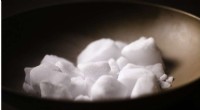
* Sublimation: Some substances can go directly from solid to gas, skipping the liquid phase, like dry ice.
4. Chemical Reactions: In some cases, adding heat can provide the activation energy needed for chemical reactions to occur. Think about cooking food – heat breaks down molecules and allows new ones to form.
5. Ionization: In extreme cases, such as very high temperatures, atoms can become ionized – meaning they lose or gain electrons, creating ions. This is important in processes like plasma formation.
6. Electromagnetic Radiation: Heated atoms can also emit electromagnetic radiation, like light. This is why objects glow when heated, and how incandescent light bulbs work.
It's important to remember that not all atoms behave the same way when heated. Different types of atoms have different bonding strengths, melting points, and other properties. This explains why some materials melt at low temperatures while others remain solid at very high temperatures.